
Messianic Torah apparel & resources to inspire your walk with Yahuah.

Wear Your Faith Boldly
Embrace Your Heritage with Style
📣 Welcome to HalleluYah Prints! 📣
Your Home for Torah Resources!
Shalom and thank you for stopping by our new home—where Messianic Torah‑Roots art meets everyday style! We create faith‑inspired apparel, gifts, and graphics that blend Scripture, Hebrew lettering, and meaningful symbols (like our beloved seven‑branch menorah) into fresh, modern designs.
✓ Torah-Centered Apparel
✓ Celebrate Your Identity with Joy
✓ Join Our Messianic Community
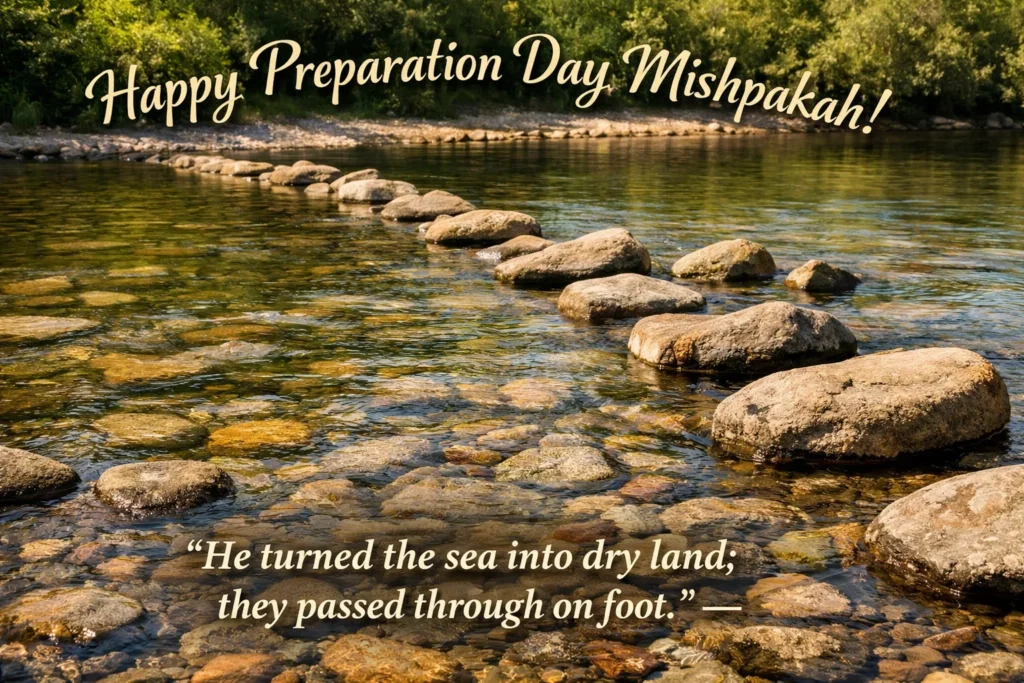
Preparation Day Blessing
You have passed through testing, and it has not been wasted.
The fire did not consume you, and the waters did not overtake you.
Elohim has preserved your footing when the path was narrow.
Your voice carries testimony formed through endurance and truth.
Let gratitude steady your steps as you move forward today.
Strength is established in you through what was endured, not avoided.
May your words recount His works with clarity and humility.


📅 Date – Updated daily at sunset CST
Today: 18th day of the 10th month (Zadok calendar)
January 9th, 2026 – 20th of Kislev 5785

How Awesome Your Deeds
Today’s Random Psalm: Psalm 66
Shout to Elohim, all the earth.
Sing the glory of His name;
make His praise weighty.
Say to Elohim, “How awesome are Your works.
Through the greatness of Your strength Your enemies submit themselves to You.
All the earth bows down to You and sings to You;
they sing Your name.”
Come and see the works of Elohim;
awesome in deed toward the sons of men.
He turned the sea into dry land;
they passed through the river on foot.
There we rejoiced in Him.
He rules by His might forever;
His eyes watch the nations.
Let not the rebellious exalt themselves.
Bless our Elohim, O peoples,
and make the voice of His praise heard,
who keeps our being in life
and does not allow our feet to slip.
For You have tested us, O Elohim;
You have refined us as silver is refined.
You brought us into the net;
You laid oppression upon our loins.
You caused men to ride over our heads;
we went through fire and through water,
yet You brought us out into abundance.
I come into Your house with burnt offerings;
I pay You my vows,
which my lips uttered
and my mouth spoke when I was in distress.
Come, hear, all you who fear Elohim,
and I recount what He has done for my being.
Blessed is Elohim,
who has not turned away my prayer
nor His loving-commitment from me.
Bonus
Isaiah 43
Do not fear, for I have redeemed you; I have called you by your name; you are Mine.
When you pass through the waters, I am with you; and through the rivers, they do not overflow you.
When you walk through fire, you are not burned, nor does the flame kindle upon you.
For I am Yahuah your Elohim, the Set-Apart One of Yisra’el, your Savior.
I give men in your place and peoples in exchange for your life.
Since you are precious in My eyes, honored, and I have loved you.
Do not fear, for I am with you; I bring your seed from the east and gather you from the west.
I say to the north, “Give up,” and to the south, “Do not withhold.”
Bring My sons from afar and My daughters from the ends of the earth.
Everyone called by My name, whom I have created for My esteem.
You are My witnesses, declares Yahuah, and My servant whom I have chosen.
Before Me no mighty one was formed, nor is there after Me.
I, I am Yahuah, and besides Me there is no savior.
I declared and saved and proclaimed, when there was no strange one among you.
Thus you are My witnesses.
I am the El, and also from this day forward I am He.
I work, and who turns it back.

Summary of Parashah Sh’Mot
Exodus 1:1-6:1
Torah Portion Sh’Mot marks the transition from the family narrative of B’reshit to the national redemption account of Shemot. The book opens not with abstraction, but with names — a reminder that Elohim’s covenant operates at both communal and personal levels. Each name anchors Yisrael’s identity, even as they dwell in a foreign land. Though Yosef’s leadership once preserved the family, a generational shift occurs when a new Pharaoh arises who does not recognize Yosef’s contributions. This deliberate forgetting leads to fear, and fear gives birth to oppression.
Pharaoh’s strategy is calculated. He enslaves Yisrael through harsh labor, forcing them to build storage cities and attempting to crush them physically and spiritually. Yet the Torah emphasizes a paradox: the more Yisrael is afflicted, the more they multiply. This reveals a core theological truth — affliction cannot nullify Elohim’s blessing. Human systems of power cannot overturn covenant promises.
When forced labor fails to curb growth, Pharaoh escalates to infanticide. He first attempts covert murder through the Hebrew midwives, but they fear Elohim above royal decree. Their civil disobedience is not portrayed as rebellion, but righteousness rooted in reverence for Elohim. When Pharaoh’s plan is exposed, he openly commands that all male Hebrew infants be cast into the Nile — the very river revered as a source of life in Mitsrayim becomes a tool of death.
Against this backdrop, Moshe is born. His mother recognizes that the child is “good,” echoing creation language, and hides him for as long as possible. When concealment is no longer possible, she places him in a basket — the same word used for Noaḥ’s ark — signaling preservation through water rather than destruction. Pharaoh’s own daughter defies her father’s decree, demonstrating that Elohim’s deliverance often comes from unexpected vessels. Moshe is raised within the house of oppression yet remains aware of his Hebrew identity.
As an adult, Moshe attempts to act as a deliverer by his own strength, killing an Egyptian taskmaster. This premature act exposes a recurring biblical principle: calling does not negate process. Moshe must be shaped before he can lead. His flight to Midyan marks a forty-year period of humility, shepherding, and obscurity. The prince of Mitsrayim becomes a shepherd of sheep — preparation for shepherding a nation.
Meanwhile, Yisrael groans under bondage. The Torah emphasizes that Elohim hears their cries, sees their suffering, and remembers His covenant. This does not imply forgetfulness, but rather signals the appointed time for action has arrived. Elohim’s compassion is covenant-driven, not circumstance-driven.
The encounter at the burning bush forms the theological core of the portion. Elohim reveals Himself as set-apart, commanding Moshe to remove his sandals. He declares Himself as the Elohim of the patriarchs, affirming continuity of covenant. The revelation of the Name Yahuah signifies self-existence, faithfulness, and active presence. Elohim is not distant; He comes down to deliver.
Moshe’s resistance highlights human inadequacy in contrast to divine sufficiency. Elohim does not deny Moshe’s weakness but overrides it with His presence. Signs are given not to empower Moshe’s ego, but to demonstrate Elohim’s authority over creation. Even Aharon’s involvement reflects Elohim’s patience and accommodation.
When Moshe confronts Pharaoh, the immediate outcome appears to contradict Elohim’s promise. Pharaoh increases the workload, Yisrael becomes discouraged, and Moshe questions his calling. The portion intentionally ends here — in tension — teaching that redemption often begins with resistance, not relief. Elohim reassures Moshe that deliverance will come not through persuasion, but through power.
Sh’Mot lays the foundation for understanding redemption as an act of Elohim’s sovereign will, executed through covenant faithfulness, and revealed progressively through obedience, endurance, and trust.

Zadok Calendar: https://zadokway.com/
Wear Your Faith Boldly
Explore our unique collection of Messianic T-shirts that celebrate your beliefs and heritage.
Join a community of believers who express their faith through stylish, Torah-inspired apparel.
Our designs reflect a joyful worship experience, connecting you to your roots.
Discover Your Heritage Through Fashion
Each piece is crafted to inspire and uplift, blending tradition with modern style.
Our shirts are more than just clothing; they are a statement of faith, identity, and community. Celebrate your Messianic roots with designs that resonate with your beliefs and values, making every outfit a testament to your journey.
Join the Movement Today!
Frequently Asked Questions
What is Torah Roots?
Messianic Torah Roots is a faith that combines obedience with the belief in Yahshua (Jesus) as the Messiah. It emphasizes the importance of the Torah and celebrates the Hebrew roots of Christianity.
How do I care for my Torah T-shirts?
To keep your Torah T-shirts looking great, we recommend washing them in cold water and hanging them to dry. Avoid bleach and high heat to preserve the designs.
Can I return or exchange my order?
Yes, we offer a 30-day return and exchange policy. If you’re not satisfied with your purchase, please contact us for assistance with the process.
Do you ship internationally?
Yes, we ship to select international locations. Please check our shipping policy for more details on rates and delivery times.
What materials are used for the shirts?
Our shirts are made from 100% premium cotton, ensuring comfort and durability. We prioritize quality to provide you with apparel that lasts while showcasing your faith and identity.

Need assistance with your order?
We’re here to help! If you have any questions or need support, feel free to reach out to us. Your satisfaction is our priority, and we’re eager to assist you.

⭐️⭐️⭐️⭐️⭐️
Excellent quality shirt! I wasn’t sure what to expect ordering online, but it really exceeded my expectations. The material feels durable but still super comfy, and the design is bold and clear. I wore it to Bible study and got several compliments—it’s a great way to share faith while wearing something you actually want to keep on all day.
Sarah