
Messianic Torah apparel & resources to inspire your walk with Yahuah.

Wear Your Faith Boldly
Embrace Your Heritage with Style
📣 Welcome to HalleluYah Prints! 📣
Your Home for Torah Resources!
Shalom and thank you for stopping by our new home—where Messianic Torah‑Roots art meets everyday style! We create faith‑inspired apparel, gifts, and graphics that blend Scripture, Hebrew lettering, and meaningful symbols (like our beloved seven‑branch menorah) into fresh, modern designs.
✓ Torah-Centered Apparel
✓ Celebrate Your Identity with Joy
✓ Join Our Messianic Community

Blessing for the Fourth Day
May the help of Yahuah surround you like strong walls today.
Remember that the One who created heaven and earth also watches over your path.
Let confidence grow within you as you recall the times He has already delivered you.
When challenges appear, turn your thoughts toward the faithfulness of Elohim.
Stand steady in trust, knowing that no trap laid by others escapes His sight.
Let gratitude rise as you recognize the quiet rescues that happen in everyday life.
Choose courage rather than fear when circumstances seem uncertain.
Let your words speak of the goodness and protection of Yahuah.
May your life reflect the truth that the snare is broken and true help comes from Him.
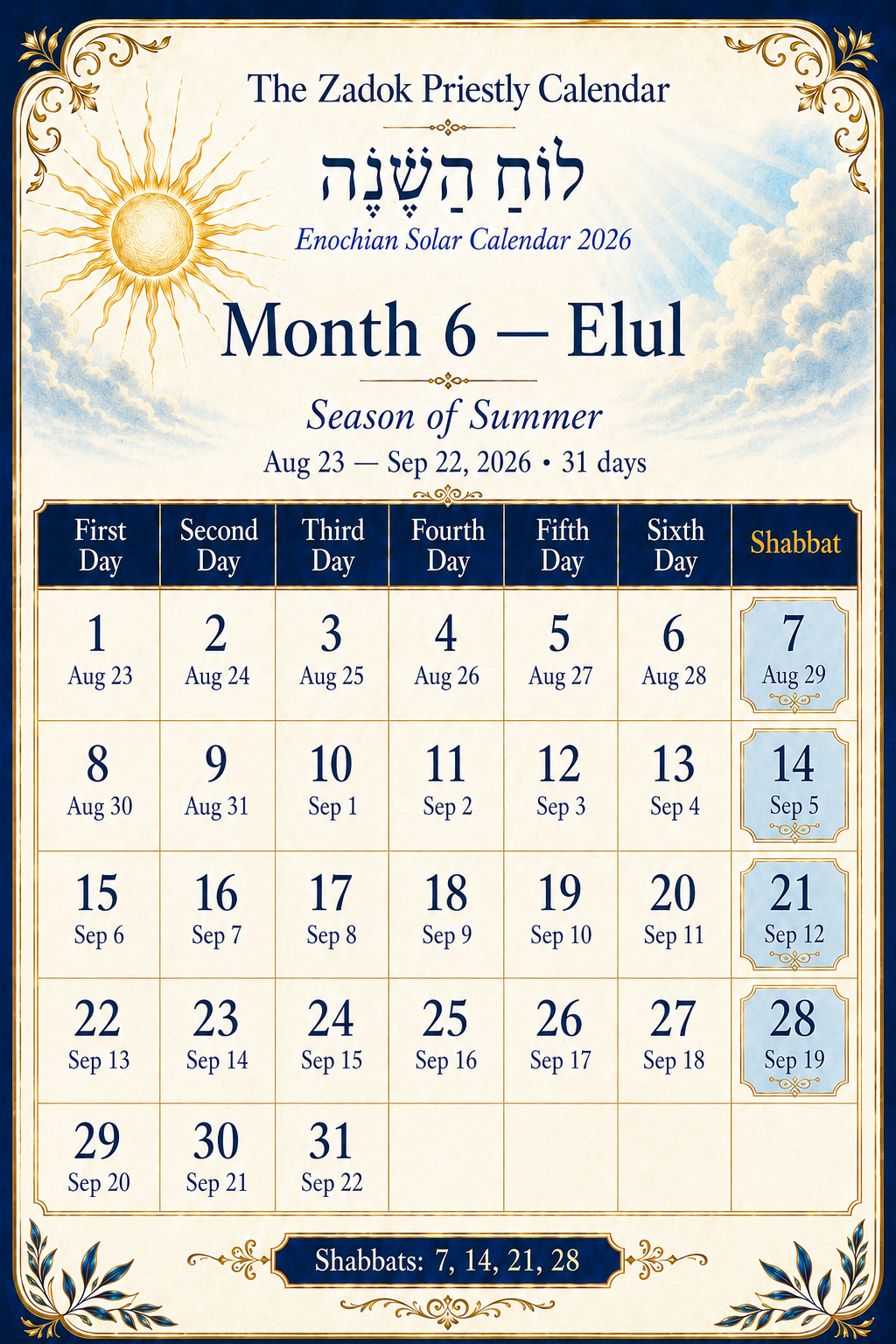
📅 Date – Updated daily at sunset CST
Today: 18th day of the 11th month (Zadok calendar)
March 11th, 2026 – 22nd of Adar 5786

Had He Not Been on Our Side
Todays Random Psalm of the Day – Psalm 76
If it had not been Yahuah who was on our side—
let Israel now say—
if it had not been Yahuah who was on our side
when people rose up against us,
then they would have swallowed us up alive,
when their anger was kindled against us;
then the flood would have swept us away,
the torrent would have gone over us;
then over us would have gone
the raging waters.
Blessed be Yahuah,
who has not given us
as prey to their teeth!
We have escaped like a bird
from the snare of the fowlers;
the snare is broken,
and we have escaped!
Our help is in the name of Yahuah,
who made heaven and earth.
🌿 Companion Scripture
Acts 12:5–17
So Peter was kept in prison, but earnest prayer for him was made to Elohim by the assembly. Now when Herod was about to bring him out for trial, Peter was sleeping between two soldiers, bound with two chains, and sentries were guarding the prison door. Suddenly an angel of Yahuah appeared, and a light shone in the cell.
The angel struck Peter on the side and woke him, saying, “Get up quickly.” The chains fell off his hands. The angel told him to dress himself and follow, and Peter obeyed. At first Peter thought he was seeing a vision, but it was truly happening. They passed the first and second guard and came to the iron gate leading into the city, which opened for them by itself.
After walking through one street, the angel departed. Peter then realized that Yahuah had truly sent His messenger and rescued him from the hand of Herod and from all that the people expected. When he understood this, he went to the house where many were gathered together praying. A servant girl named Rhoda came to answer the door. Recognizing Peter’s voice, she ran back in joy before opening it and announced that Peter was standing outside.
At first they thought she was mistaken, but Peter continued knocking until they opened the door and were amazed. He motioned for silence and told them how Yahuah had brought him out of prison. This deliverance reflected the truth proclaimed in Psalm 124: the snare was broken and the servant of Elohim escaped. The assembly recognized that their help truly came from Yahuah, the Maker of heaven and earth.

Summary of Parashah Vayak’hel (וַיַּקְהֵל)
Exodus 35:1–38:20
Parashah Vayak’hel, meaning “And he assembled,” begins with Moses gathering the entire Israelite assembly to deliver Yahuah’s commandments regarding the Sabbath and the building of the Tabernacle. This parashah directly follows Parashah Ki Tissa, where the incident of the golden calf demonstrated Israel’s susceptibility to idolatry and the urgent need for proper worship. Vayak’hel emphasizes obedience, community participation, and the holy craftsmanship necessary to construct the dwelling place for Elohim among His people.
The parashah opens with a focus on the Sabbath, reinforcing the divine rhythm of rest and work. Moses reminds Israel that six days are designated for labor, but the seventh day must be holy—a day of rest dedicated entirely to Yahuah. This instruction establishes a crucial principle: obedience to Yahuah’s commands, beginning with Sabbath observance, is a prerequisite for all service to Him. The Sabbath is not merely a day of rest; it is a foundational act of trust and devotion, demonstrating Israel’s submission to Yahuah’s authority. The commandment links rest with sanctity, teaching that sacred work is ineffective if the heart is not aligned with Yahuah’s design.
Exodus 35:1–3 stresses the importance of not kindling fire on the Sabbath, connecting daily life to holiness. In the aftermath of idolatry, the people are reminded that obedience to Yahuah is central and that even domestic activities must honor His rest. The parashah frames the remainder of the narrative: the construction of the Tabernacle is a sacred task, but it must be done by a people who first respect and trust the rhythm Yahuah established.
The Assembly and Voluntary Offerings
Moses calls all Israel together and reiterates the commandments regarding voluntary offerings for the Tabernacle (Exodus 35:4–29). Yahuah commands that anyone whose heart is stirred bring gifts for the holy work: gold, silver, bronze, blue, purple, and scarlet yarn, fine linen, goat hair, rams’ skins dyed red, acacia wood, oil, spices, and precious stones. The emphasis on voluntary giving highlights an essential principle of worship: it is the heart and willingness of the giver that matter, not the quantity of the gift.
The text repeatedly uses the phrase “everyone whose heart stirred him”, underscoring that offerings must be given freely. Spiritual motivation, not obligation, produces sacred work. This principle is echoed in the New Testament through the early assembly, which modeled the same voluntary spirit in sharing (Acts 2:42–47). The parashah emphasizes that when people give from the heart, the work of Elohim is not only supplied materially but also energized spiritually.
Moses’ role is to communicate Yahuah’s instructions clearly, ensuring that the people understand the materials, the purpose, and the sacred nature of the work. By relaying Yahuah’s words precisely, Moses acts as an intermediary who preserves both obedience and unity. This process demonstrates that leadership in spiritual matters requires fidelity to Elohim’s instructions and the ability to inspire participation without coercion.
Appointment of Bezalel and Oholiab
Yahuah fills Bezalel, from the tribe of Judah, with the Spirit, granting wisdom, understanding, knowledge, and all manner of craftsmanship (Exodus 35:30–35). Bezalel is appointed to oversee the artistic work, including metalwork, weaving, and carving. Oholiab, from the tribe of Dan, is appointed as his assistant. Together, they guide the artisans in crafting the holy objects precisely according to the divine pattern shown to Moses on Mount Sinai.
The filling of these craftsmen with the Spirit of Elohim demonstrates a profound spiritual principle: skill and artistry, when empowered by Yahuah, become ministry. Their ability to translate divine vision into tangible sacred objects shows that human talent, aligned with divine guidance, can manifest holiness in the material world. The text emphasizes both natural talent and Spirit-led inspiration, showing that Elohim equips those He calls with exactly what is needed for His service.
Crafting the Tabernacle and Its Components
The people’s generosity is overwhelming, as they bring more materials than required (Exodus 36:4–7). Moses instructs them to stop bringing offerings because the artisans have enough to complete the work. This abundance reflects the people’s spiritual responsiveness when their hearts are stirred. The surplus of resources ensures that nothing in the Tabernacle is made sparingly or without beauty, emphasizing the honor due to Elohim in the creation of His dwelling place.
Themes of Community and Unity
Throughout Vayak’hel, the unity of the community is highlighted. The Tabernacle is built not by a few but by the entire assembly, contributing materials, skills, and labor. Everyone participates according to their ability and desire, reflecting a collective devotion to Yahuah. This communal participation models principles later echoed in the New Testament, where the assembly functions as a spiritual body, each member contributing gifts and labor for the edification of all (1 Corinthians 12:4–31).
Generosity, skill, and obedience intersect in this narrative, demonstrating that true worship is holistic: it involves the heart, the hands, and the mind. The parashah repeatedly underscores that the sacred work of Elohim cannot succeed through coercion; it requires willing, joyful participation.
Sabbath as Foundation for Sacred Work
The parashah begins and ends with references to the Sabbath. By placing Sabbath instructions before the call to build the Tabernacle, Elohim establishes a hierarchy: relationship with Him through rest precedes religious activity. Obedience to Yahuah’s timing sanctifies all subsequent work. Without honoring the Sabbath, the service of the Tabernacle would lack holiness; with it, every offering, stitch, and carving becomes worship.
The Sabbath also symbolizes spiritual rhythm and reliance on Elohim. Work and rest must balance; rest acknowledges dependence on Yahuah’s provision rather than human effort alone. This principle carries forward into the lives of believers, who must first cultivate intimacy with Elohim to serve effectively.

Zadok Calendar: https://zadokway.com/
Wear Your Faith Boldly
Explore our unique collection of Messianic T-shirts that celebrate your beliefs and heritage.
Join a community of believers who express their faith through stylish, Torah-inspired apparel.
Our designs reflect a joyful worship experience, connecting you to your roots.
Discover Your Heritage Through Fashion
Each piece is crafted to inspire and uplift, blending tradition with modern style.
Our shirts are more than just clothing; they are a statement of faith, identity, and community. Celebrate your Messianic roots with designs that resonate with your beliefs and values, making every outfit a testament to your journey.
Join the Movement Today!
Frequently Asked Questions
What is Torah Roots?
Messianic Torah Roots is a faith that combines obedience with the belief in Yahshua (Jesus) as the Messiah. It emphasizes the importance of the Torah and celebrates the Hebrew roots of Christianity.
How do I care for my Torah T-shirts?
To keep your Torah T-shirts looking great, we recommend washing them in cold water and hanging them to dry. Avoid bleach and high heat to preserve the designs.
Can I return or exchange my order?
Yes, we offer a 30-day return and exchange policy. If you’re not satisfied with your purchase, please contact us for assistance with the process.
Do you ship internationally?
Yes, we ship to select international locations. Please check our shipping policy for more details on rates and delivery times.
What materials are used for the shirts?
Our shirts are made from 100% premium cotton, ensuring comfort and durability. We prioritize quality to provide you with apparel that lasts while showcasing your faith and identity.
Need assistance with your order?
We’re here to help! If you have any questions or need support, feel free to reach out to us. Your satisfaction is our priority, and we’re eager to assist you.

⭐️⭐️⭐️⭐️⭐️
Excellent quality shirt! I wasn’t sure what to expect ordering online, but it really exceeded my expectations. The material feels durable but still super comfy, and the design is bold and clear. I wore it to Bible study and got several compliments—it’s a great way to share faith while wearing something you actually want to keep on all day.
Sarah